
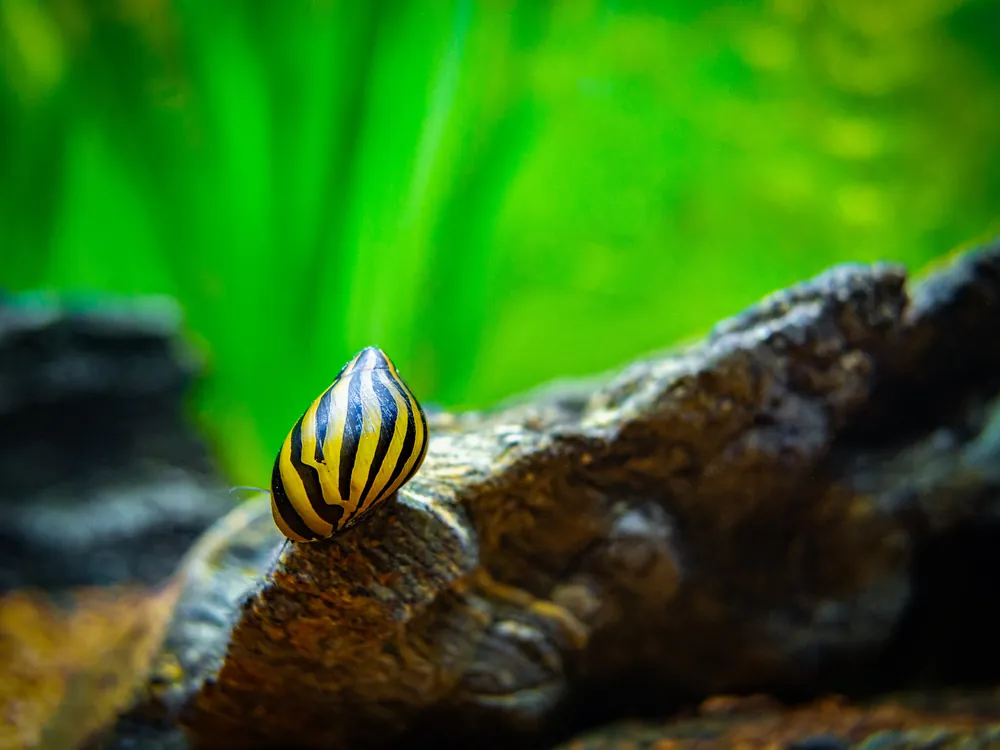
Zebra Nerite Snail
Zebra Nerite Snail(Neritinasp.) displays the classic and most recognizable Nerite pattern — alternating black and yellow stripes running along the shell in a bold, graphic banding that makes this one of the most popular Nerites in the hobby. Nerite Snails are the gold standard for algae control in freshwater aquariums — voracious, efficient grazers that consume virtually every type of algae from virtually every surface, without touching plants or bothering tankmates.
⚠ Copper Warning:Copper isfatalto all snails — even trace amounts. Never use copper-based medications or treatments in any aquarium housing snails. Check the ingredients of any fish medication before adding it to a snail tank. If in doubt, move snails to a separate container before treating.
Nerite Snails come from brackish and freshwater environments across East Africa, Southeast Asia, and the Indo-Pacific — rivers, streams, and coastal lagoons where algae grows abundantly on rocks and hard surfaces. Their brackish-water origins explain their preference for harder, more alkaline water. In freshwater aquariums,Nerite Snails cannot successfully breed— their larvae require brackish water to develop, making population explosion impossible. This makes them one of the safest snails to add to any aquarium.
Nerite Snails are accomplished climbers and will regularly venture above the waterline — a fitted lid andGlasgarten SnailSafeapplied to the tank rim are strongly recommended. They are entirely peaceful and safe with fish, plants, and shrimp of all sizes.
Feeding & Care Tip:Nerite Snails are primarily algae grazers and will actively clean glass, rocks, driftwood, and decorations. In a well-established tank with healthy algae growth, supplemental feeding is minimal. If your tank is algae-poor, supplement withGlasgarten Snail DinnerandHikari Mini Algae Wafers. AddGlasgarten Mineral Junkie TreatsandGlasgarten Mineral Treatsregularly for shell health.
Nerite Snails lay small white calcified eggs on hard surfaces — glass, rocks, and driftwood. The eggs are harmless but cannot hatch in freshwater and can be cosmetically annoying. Interestingly, tanks with sufficient Nerite populations tend to see fewer eggs per individual snail, and the eggs do gradually disappear on their own over time.
Glasgarten SnailSafe:Apply to the rim of the aquarium to deter snails from climbing out — a common behavior particularly in Nerite and Mystery Snails. A thin application around the top edge of the glass creates a safe barrier that discourages escape without harming the snails.
| Zebra Nerite Snail | |
|---|---|
| Difficulty | Beginner — Easy |
| Adult Size | Up to 1 inch (2.5 cm) |
| Recommended Stocking | 1 per 5 gallons |
| Ideal Temperature | 72–78°F (22–26°C) |
| Ideal pH | 7.0–8.5 |
| Ideal GH | 8–18 dGH |
| Ideal KH | 6–12 dKH |
| Staple Food | Algae (primary); Glasgarten Snail Dinner; Hikari Mini Algae Wafers if algae is scarce |
| Treat / Supplement | Glasgarten Mineral Junkie Treats; Glasgarten Mineral Treats |
| Origin | East Africa, Southeast Asia, and Indo-Pacific (brackish and freshwater) |
| Notes | Algae Eating:Best algae eaters in freshwater — consume green algae, brown algae, diatoms, and biofilm Breeding:Cannot breed in freshwater — no population risk Eggs:Lay small white calcified eggs on hard surfaces — harmless, do not hatch in freshwater, disappear over time Shell Health:Maintain pH above 7.0; supplement with Glasgarten minerals Copper:Fatal — never use copper medications in snail tanks Escape:Use Glasgarten SnailSafe on tank rim |
Reviews
There are no reviews yet.