
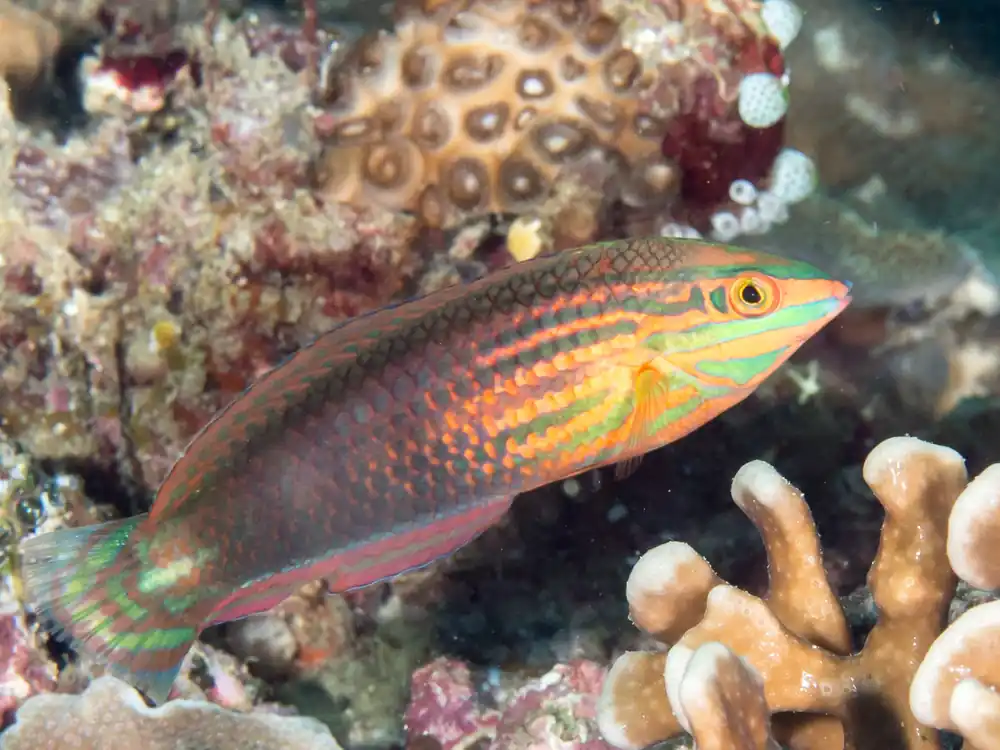
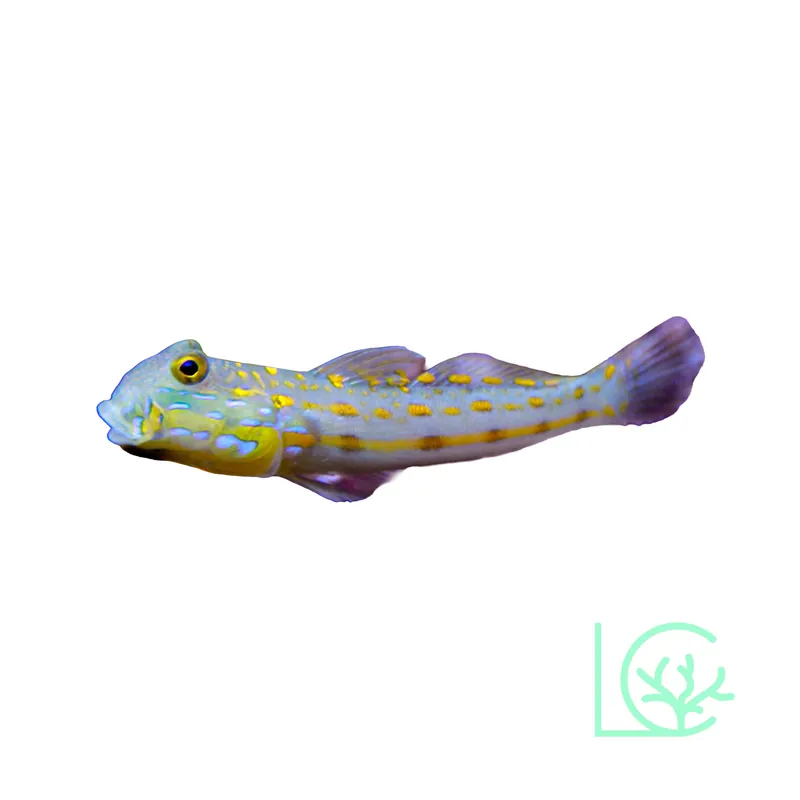
A greatXmas Fiji Juvenile/Sub-Adult Wrasse MAC Certified!
Origin: Fiji
Size info:
Size M: approx. 2 – 3″
There once was a wrasse named Biocellatus,
From Fiji, he’s quite spectacular, trust us.
With a MAC certification,
He’s a true conservation sensation,
His vibrant colors and pattern, a must-see fuss!
Keeping the Christmas Wrasse in an Aquarium
The Christmas Wrasse, also known as Halichoeres biocellatus, is a popular fish among aquarium enthusiasts. These wrasses are known for their vibrant colors, making them a beautiful addition to any tank.
When it comes to keeping Christmas Wrasse in an aquarium, there are a few things to keep in mind. These fish are generally hardy and easy to care for, but they do require a few specific conditions in order to thrive.
Tank Size
Christmas Wrasse are active swimmers and need plenty of room to move around. As such, it’s recommended that you keep these fish in a tank that’s at least 50 gallons in size. This will give them plenty of space to swim and explore.
Water Conditions
Christmas Wrasse prefer warm water with a temperature range of 75°-82°F. They also require a pH range of 8.1-8.4, and a salinity level of 1.020-1.025. It’s important to keep the water clean and well-filtered to maintain these conditions.
Diet
Christmas Wrasse are carnivores and will eat a variety of foods, including small crustaceans and worms. They also enjoy frozen or live brine shrimp and mysis shrimp. It’s important to feed them a varied diet to ensure they get all the nutrients they need.
Behavior
Christmas Wrasse are generally peaceful fish and can be kept with other non-aggressive species. They do have a tendency to jump, so it’s important to have a tight-fitting lid on the tank to prevent them from escaping.
Coolest Stuff About the Christmas Wrasse
- The Christmas Wrasse gets its name from its vibrant red and green coloration, which is reminiscent of the holiday season.
- These fish are known for their playful behavior and can often be seen darting in and out of rocks and caves in the tank.
- Christmas Wrasse are known to change color as they mature, with males often developing a more intense red coloration.
- These fish are also known for their ability to change sex. When the dominant male in a group dies or is removed, the largest female will often undergo a sex change and become the new male.
Reviews
There are no reviews yet.