
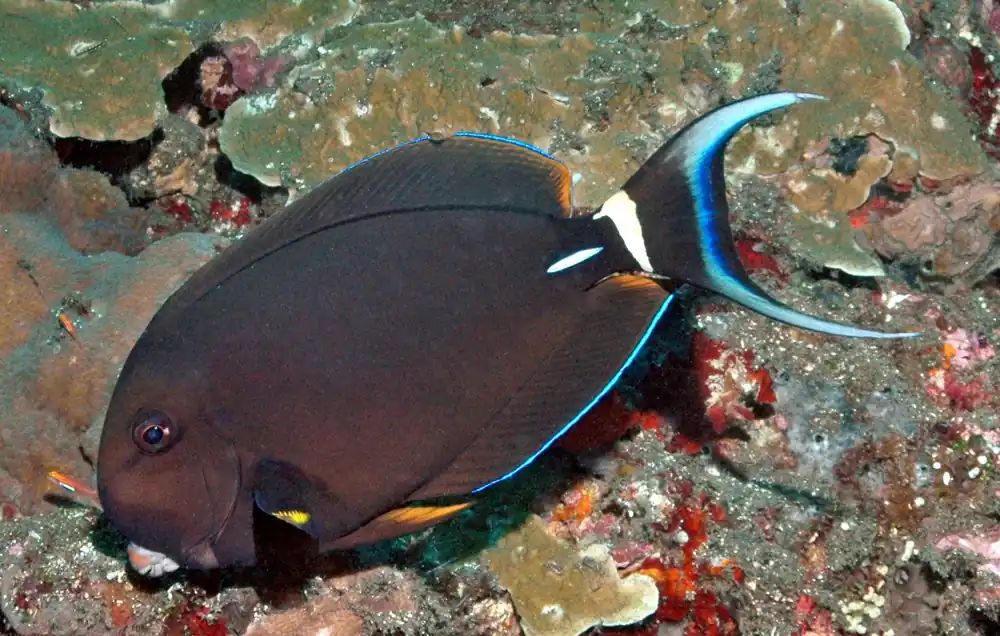
A greatWhite-Spine Surgeon Tang!
Origin: Eastern Asia
Size info:
Size L: approx. 4.5 – 5.5″
There once was a tang with a spine,
Whose beauty was simply divine,
White-Spine Surgeon Tang it’s name,
A striking fish, worthy of fame,
In clean water, it’ll surely shine!
This fish is known for its scalpel,
Which it uses with precision and skill,
To ward off any foe,
And protect itself, you know,
Its defense is quite the thrill!
With a body of yellow and blue,
And a spine that’s ivory hued,
This tang is a sight,
To behold with delight,
Its elegance is truly renewed!
So if you see a White-Spine Surgeon Tang,
Be sure to give it a bang,
For it’s a magnificent fish,
One that surely won’t vanish,
And deserves all the love it can get!
Keeping White-Spine Surgeon Tang in an Aquarium
The White-Spine Surgeon Tang, also known as the Whitecheek Surgeonfish, is a popular saltwater aquarium fish. Here are some things to keep in mind when caring for this species:
- Size: White-Spine Surgeon Tangs can grow up to 10 inches in length, so they require a large aquarium of at least 75 gallons.
- Water Quality: These fish are sensitive to changes in water quality, so it’s important to maintain stable parameters. They prefer a temperature range of 72-78°F and a pH of 8.1-8.4.
- Diet: White-Spine Surgeon Tangs are herbivores and should be fed a varied diet of algae, seaweed, and other plant matter. They may also accept some meaty foods like brine shrimp or mysis shrimp.
- Behavior: These fish can be aggressive towards other tangs, especially those of the same species. It’s best to keep only one White-Spine Surgeon Tang in an aquarium, unless it is very large.
Coolest Stuff about White-Spine Surgeon Tangs
- They have a unique, triangular shape with a white spine on their tail.
- They are known for their ability to control algae growth in aquariums.
- White-Spine Surgeon Tangs can change their coloration depending on their mood or environment.
- They are active swimmers and can often be seen darting around the aquarium.
- These fish are popular in the aquarium trade and can be found in many hobbyist’s tanks.
Reviews
There are no reviews yet.