
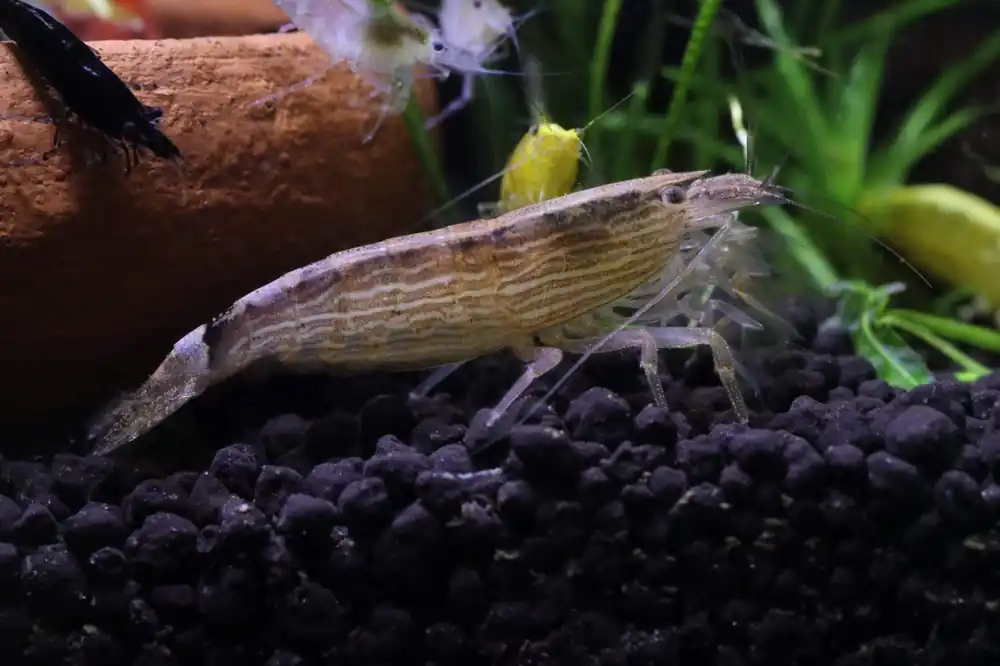
Vampire Shrimp
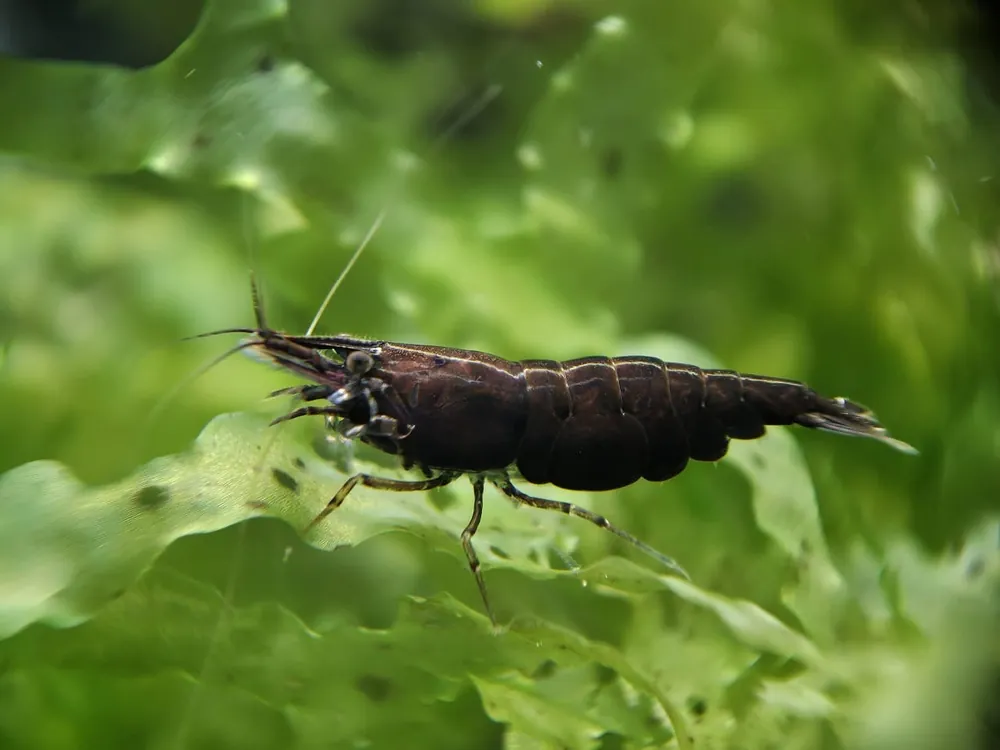
Vampire Shrimp(Atya gabonensis) is a striking blue-grey to purple filter-feeding giant from the rivers of West Africa — a completely different part of the world from most freshwater shrimp in the hobby, which are typically sourced from Southeast Asia. Despite the dramatic name, Vampire Shrimp are entirely harmless filter feeders that pose no threat to tankmates. They use the same fan-like front appendages as the Bamboo Shrimp to catch suspended particles drifting through the water column, and they grow to a substantial 3 inches, making them one of the more visually impressive invertebrates available for a freshwater aquarium.
⚠ Copper Warning:Copper isfatalto all shrimp — even trace amounts. Never use copper-based medications or treatments in any aquarium housing shrimp. Check all fish medications carefully before use.⚠ Flow Requirement:Vampire Shrimpmusthave a steady current directed toward their chosen perch — without it, they cannot catch enough food and will slowly starve even in a tank with plenty of food in the water column. Position a filter outlet, powerhead, or airstone so a consistent flow passes over a perch (driftwood, rock, or plant stem) where the shrimp can post up and filter feed.Feeding & Care Tip:As a true filter feeder, the Vampire Shrimp cannot eat standard pellet or wafer foods dropped on the substrate — it needs fine particles suspended in the water column where its fans can catch them.GlasGarten Bacter AEandGlasGarten Shrimp Baby Foodare ideal — both create a cloud of micro-particles in the current that the shrimp will actively filter feed on. Dose these near the flow source the shrimp is using rather than across the whole tank for the best feeding response.
Vampire Shrimp are completely peaceful, shy, and spend much of their time tucked into hiding spots near a current, emerging to post up and filter feed when conditions are right. Like the Bamboo Shrimp, they do best in established, mature aquariums — a brand new tank simply does not have enough suspended organic particulate to sustain a filter feeder, so wait until a tank has been running and planted for some time before adding one. They are highly social with other filter feeders and will often be found sharing the same current alongside Bamboo Shrimp and Thai Micro Crabs, all of which have identical flow and feeding requirements. Avoid keeping them with aggressive or large fish, and provide secure hiding spots near the flow they prefer.
Like all shrimp, Vampire Shrimp cannot reproduce in freshwater — their larvae require brackish water to develop, so there is no risk of unwanted population growth in a home aquarium. Molting is the most vulnerable period in their life cycle; do not remove molted shells, as the shrimp will consume them to reclaim minerals. Keep ammonia and nitrite at zero at all times, as this species is particularly sensitive to poor water quality.
| Vampire Shrimp | |
|---|---|
| Difficulty | Intermediate — specific flow and feeding needs |
| Temperament | Peaceful, shy |
| Adult Size | Up to 3 inches (7.6 cm), occasionally larger under ideal conditions |
| Group Size | Can be kept singly or in small groups |
| Recommended Stocking | 1 per 20 gallons of established, planted aquarium |
| Ideal Temperature | 74–82°F (23–28°C) |
| Ideal pH | 6.5–7.5 |
| Diet | Filter feeder — suspended micro-particles only, not substrate foods |
| Staple Food | GlasGarten Bacter AE; GlasGarten Shrimp Baby Food (dosed near flow) |
| Origin | West Africa — rivers of Ghana, Cameroon, and surrounding countries |
| Notes | Copper:Fatal — never use copper medications in shrimp tanks Flow:Requires steady current directed at its perch to filter feed successfully Tank Maturity:Needs an established, mature aquarium with adequate suspended particulate Breeding:Cannot reproduce in freshwater Water Quality:Highly sensitive to ammonia/nitrite — keep at zero Tankmates:Pairs well with Bamboo Shrimp and Thai Micro Crabs (same flow/feeding needs) |
Reviews
There are no reviews yet.