
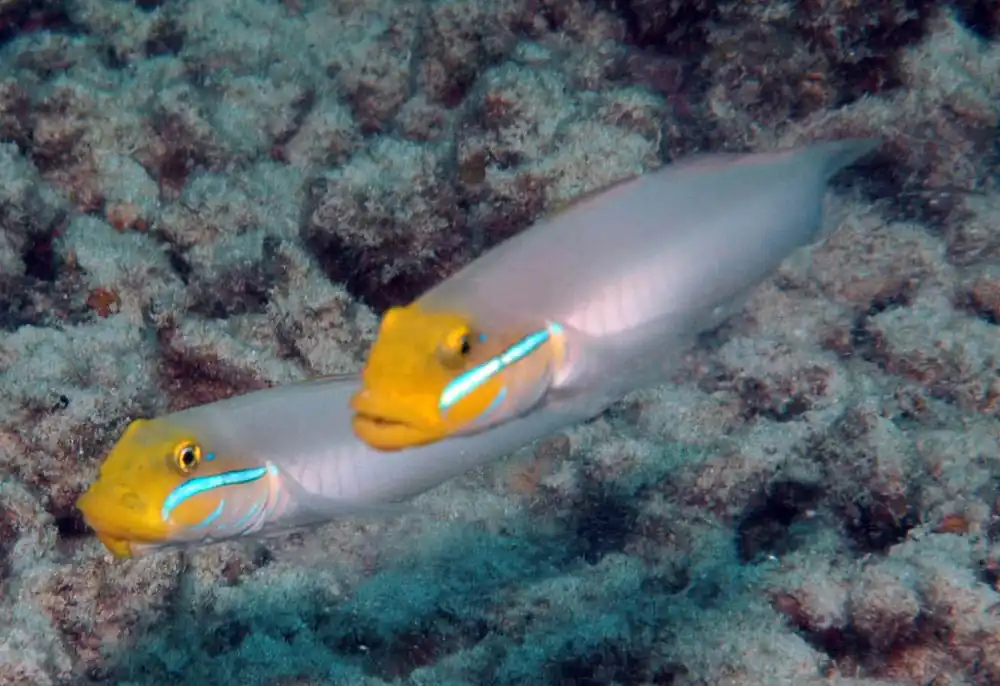
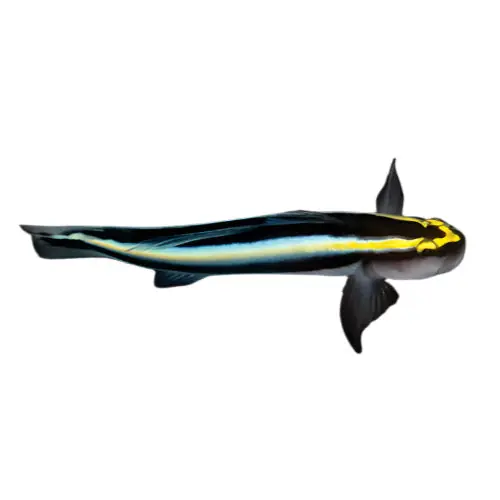
A greatSleeper Golden Head Goby!
Origin: Central Pacific
Size info:
Size L: approx. 3.5 – 4.75″
There once was a Sleeper Golden Head Goby,
Whose burrowing skills were quite a hobby.
It sifted and dug,
And ate lots of bugs,
A helpful friend to every aquarium lobby.
Valenciennea strigatahas an interesting behavior of burrowing in sand substrates and creating a network of tunnels. Additionally, they are known to form symbiotic relationships with pistol shrimp, sharing and protecting the same burrow.
Keeping Sleeper Golden Head Goby (Valenciennea strigata) in an Aquarium
The Sleeper Golden Head Goby is a popular fish among marine aquarium enthusiasts due to its unique appearance and interesting behavior. Here are some things to keep in mind when keeping this fish:
Tank Size:
These fish are relatively small, growing up to 6 inches in length, so a tank size of at least 30 gallons should be sufficient. They prefer a sandy substrate as they like to burrow.
Diet:
The Sleeper Golden Head Goby is a carnivore and should be fed a varied diet of frozen or live foods such as brine shrimp, mysis shrimp, and small pieces of fish or shrimp.
Behavior:
These fish are known for their interesting behavior of digging burrows in the sand. They also have a symbiotic relationship with pistol shrimp, where the shrimp will dig the burrow and the goby will act as a lookout for predators.
Compatibility:
Sleeper Golden Head Gobies are peaceful fish and can be kept with other peaceful fish in a reef aquarium. They may become aggressive towards other gobies of the same species, so it’s best to keep them singly or in mated pairs.
Coolest Stuff:
- The Sleeper Golden Head Goby is also known as the Golden Head Sleeper Goby or the Half-banded Sleeper Goby.
- They are found in the Indo-Pacific region, from the Red Sea to Hawaii.
- These fish have a unique coloration, with a golden head and a half-banded body.
- They are often referred to as “sleeper” gobies because they are active during the night and rest during the day.
- These fish are known to jump out of the aquarium if they feel threatened, so it’s important to have a tight-fitting lid on the tank.
Reviews
There are no reviews yet.