
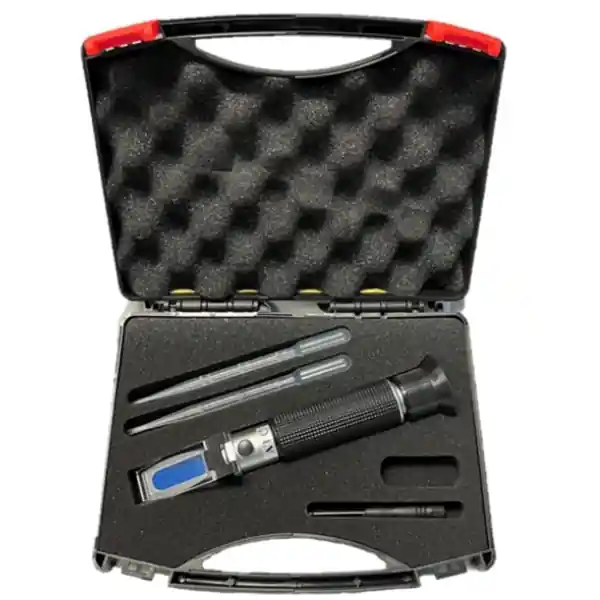
Get accurate salinity readings every time with thispremium saltwater refractometer kit. Designed for marine and reef aquariums, it measures bothsalinity (0–100 ppt)andspecific gravity (1.000–1.070)on dual scales, withAutomatic Temperature Compensation (ATC)so readings stay reliable even as room temperature shifts. The included hard storage case keeps everything organized and protected on your maintenance shelf.
Pair with Brightwell Calibration Standard for periodic accuracy checks, or browse our full lineup of water testing kits and instruments.
What’s in the Case
- Saltwater refractometer with daylight prism
- Hard plastic carrying case with foam lining
- Calibration screwdriver
- 2 plastic pipettes/droppers for sample transfer
- Microfiber cleaning cloth
Why a Refractometer?
- Far more accurate than a swing-arm hydrometer— hydrometers are notoriously inaccurate at the salinity range reef tanks actually live in.
- ATC compensates for temperature swings— no need to mentally adjust readings if your sample is warm or cold.
- Reads in seconds— a few drops on the prism, look through the eyepiece, done.
- Dual scale— whether you think in ppt (35 ppt is reef target) or specific gravity (1.025 SG is reef target), the meniscus shows you both.
- One-time calibration is all you need— recalibrate every few months with RODI water (sets zero) or 35 ppt reference solution for higher accuracy.
How to Use
- Open the prism cover. Place 2–3 drops of tank water on the prism using a pipette.
- Close the cover gently — sample should spread across the entire prism.
- Hold up to a light source (bright window or lamp) and look through the eyepiece.
- Read the value where the boundary between the blue and white sections crosses the scale.
- After use, rinse the prism with RODI water and dry with the cleaning cloth.
Calibration
Calibrate before first use and every few months thereafter:
- Zero calibration:place a few drops ofpure RODI wateron the prism. Look through the eyepiece — the boundary should read 0 ppt / 1.000 SG. If not, use the included screwdriver to adjust the calibration screw under the rubber cap until it reads exactly zero.
- 35 ppt reference solution(sold separately) gives even better accuracy at the reef-tank target range.
Specifications
| Salinity Range | 0–100 ppt |
| Specific Gravity Range | 1.000–1.070 |
| Resolution | 1 ppt / 0.001 SG |
| Temperature Compensation | Automatic (ATC) |
| Body | Aluminum with rubber-cushioned grip |
| Case | Hard plastic, foam-lined |
| Best For | Marine, reef, and brackish aquariums |
Recommended Pairings
- Brightwell Aquatics Refractometer Calibration Standard (60 ml) — 35 ppt reference fluid for periodic accuracy checks.
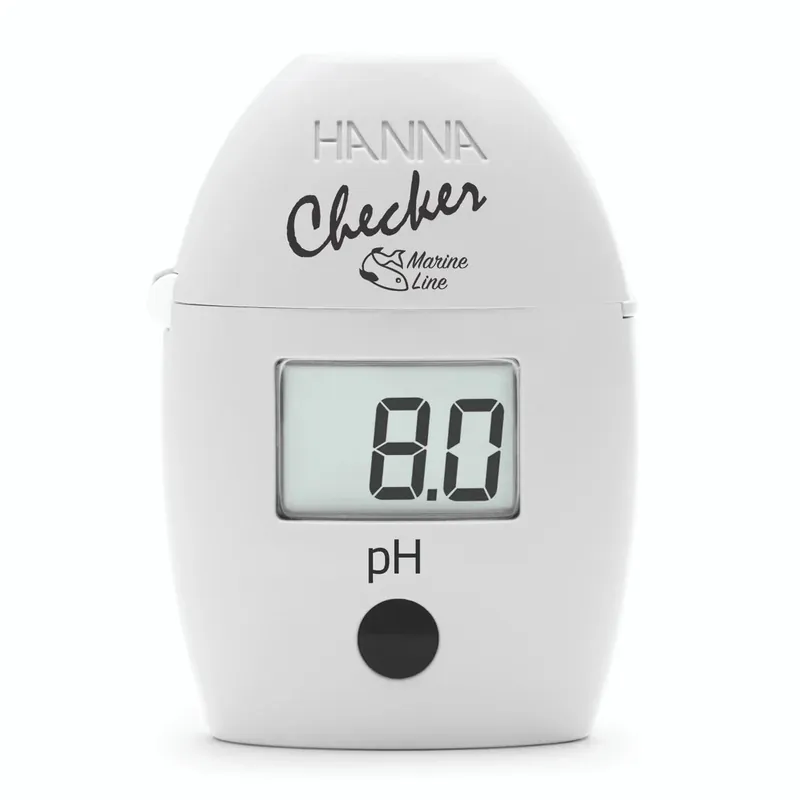
- Hanna Instruments HI96822 Digital Refractometer — if you’d rather upgrade to a digital readout.
- Browse all salt mixes — consistent salinity starts with a quality salt.
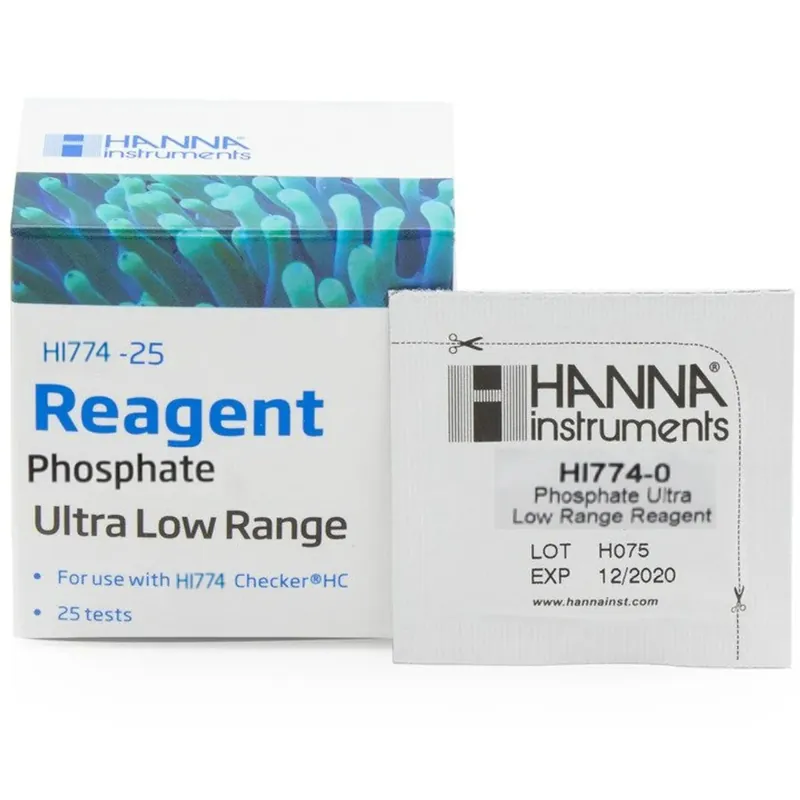
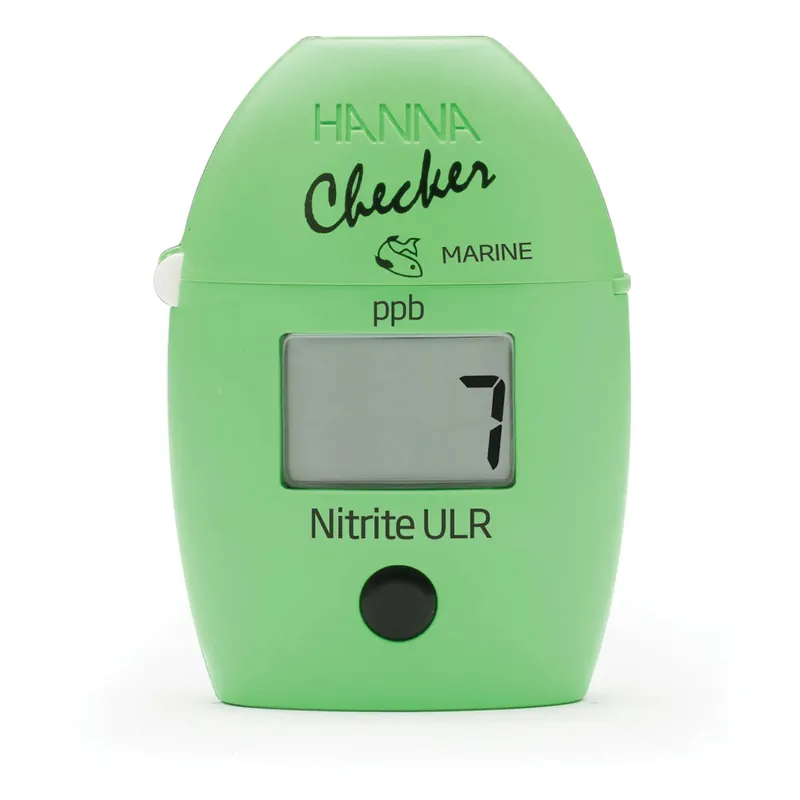
- All water testing kits and instruments — complete your reef testing toolkit.
FAQ
What’s the reef-tank target salinity?
Most reefkeepers aim for35 ppt / 1.025–1.026 specific gravity. Fish-only marine tanks tolerate 30–33 ppt; reef tanks with corals do best at 35.
How is this different from a hydrometer?
A refractometer measures how light bends through your sample — far more accurate than a floating swing-arm hydrometer, especially in the narrow 1.024–1.027 range that matters for reef tanks. ATC also compensates for temperature, which hydrometers don’t.
Does it come with calibration fluid?
The kit includes the refractometer, hard case, droppers, screwdriver, and cleaning cloth. For zero calibration, use your own RODI water. For best accuracy at reef salinity, pair with a 35 ppt reference solution like Brightwell’s calibration standard (sold separately).
How often should I calibrate?
Check calibration with RODI water every 1–2 months. If you drop or knock the unit, calibrate before the next reading.
Will it work for freshwater or pond use?
This is a saltwater-specific refractometer. For freshwater, you’d use an electrical-conductivity TDS meter instead.
What temperature range does the ATC work in?
Accurate compensation in the 50–86°F (10–30°C) range. Wait a moment after applying the sample for the prism to equalize.
Reviews
There are no reviews yet.