
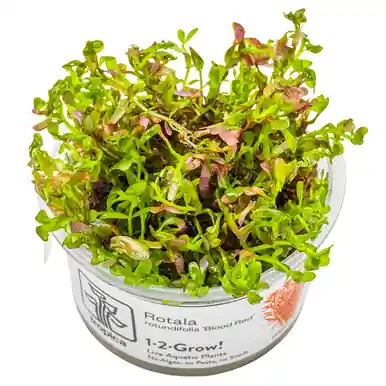
Origin: Asia
Usage: Midground, Background
CO2: Low
Light: Medium – High
Care: Easy
Growth Form: Stem
Growth Rate: Fast
Height: 6 – 12”
Width: 1”
Temp: 55 – 89F
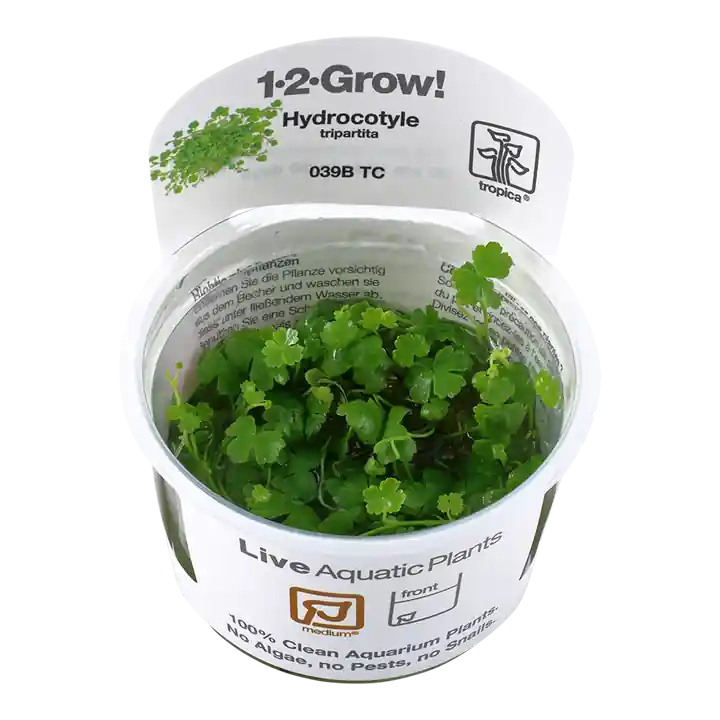
Achieve stunning aquarium success with 1•2•Grow!—premium young plants cultivated in Tropica’s laboratory and guaranteed free from snails, algae, and pesticides, ensuring safety for sensitive shrimp and fish. These compact plants are ideal for small to medium aquariums, arriving ready to divide into portions for broader coverage. With proper CO2 and fertilizer, they deliver lush, dense growth, rewarding your patience with a vibrant aquascape. Choose 1•2•Grow! for clean, healthy, and hassle-free aquarium plants that elevate your aquatic environment.
How To Use:
- Carefully take the plant out of the cup and thoroughly rinse off the growing media (agar) in a container of water.
- Split the plant in 6-8 portions using your fingers or sharp scissors. Definitely use sharp scissors to separate any small foreground plants.
- Plant the portions into the substrate using tweezers, then watch them grow!
Rotala rotundifolia ‘Blood Red’ is a cultivar of R. rotundifolia that turns a bright red hue even under moderate light. With the addition of a stronger light, CO2, and proper fertilization, it develops even deeper red coloration.
Rotala ‘Blood Red’ is a fast-growing plant that produces side shoots, becoming compact and bushy. Its dense growth often results in the lower leaves being shaded from light, so regular pruning is recommended to maintain its appearance and promote healthy growth. It thrives in water with low nitrate levels (around 0.2 ppm) and high phosphate and iron/micronutrient levels, which help enhance its vivid colors.
This plant is easy to propagate through cuttings taken from lateral or top shoots, which can be replanted directly into the substrate. The plant will quickly produce new shoots, growing densely in a bushy form. If it reaches the water’s surface, it will continue to branch out. Rotala ‘Blood Red’ is best suited for the middle or background of an aquarium, where its striking colors can serve as an accent. During warmer months, it can even be cultivated outdoors, and in temperate climates, it can survive mild winters in ponds.
Reviews
There are no reviews yet.