
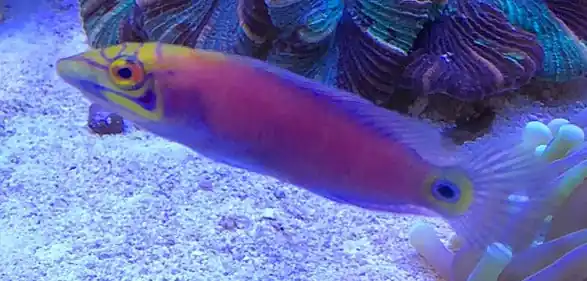
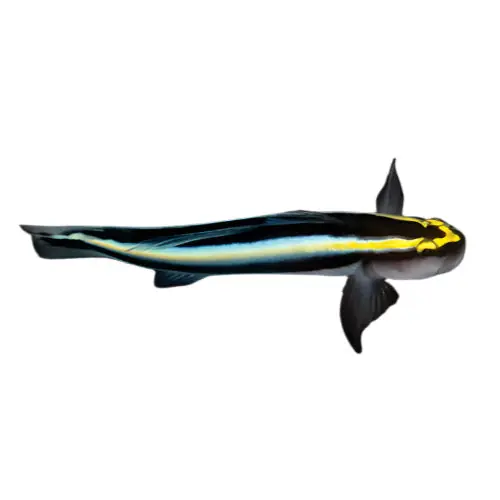
A greatMystery Wrasse!
Origin: Central Pacific
Size info:
Size M: approx. 1.25 – 2.25″
Size L: approx. 2.25 – 3.25″
There once was a fish known as Mystery,
Whose colors were quite a history,
With bright shades of green,
And a blue-purple sheen,
It’s a sight that’s a genuine victory!
But don’t be fooled by its beauty,
This wrasse is a warrior, a true duty,
It’ll fight for its space,
And give chase with such grace,
A true king of its underwater community!
So if you’re seeking a fish that’s unique,
Pseudocheilinus ocellatus is the one to seek,
With its stunning coloration,
And its feisty reputation,
It’s a treasure that’s waiting to be discovered and seen!
Keeping Mystery Wrasse (Pseudocheilinus ocellatus) in an Aquarium
Mystery Wrasse, also known as the Peacock Wrasse, is a beautiful and colorful fish that can be kept in a home aquarium. They are native to the Indian Ocean and the western Pacific Ocean and are known for their vibrant colors and unique swimming patterns.
Aquarium Requirements
Mystery Wrasse requires a minimum tank size of 50 gallons with plenty of live rock and hiding places. They prefer a sand substrate and a peaceful environment with other non-aggressive fish. The water temperature should be between 72-78°F and the pH level should be between 8.1-8.4.
Feeding
Mystery Wrasse is a carnivore and requires a varied diet consisting of meaty foods such as frozen or live brine shrimp, mysis shrimp, krill, and other small crustaceans. They also enjoy small pieces of fresh seafood such as shrimp or squid.
Behavior
Mystery Wrasse is a peaceful fish and can be kept with other non-aggressive fish. They are known for their unique swimming patterns and can often be seen darting around the tank. They are also known for their ability to change colors, especially during courtship or when stressed.
Coolest Stuff
- Mystery Wrasse is known for its ability to change colors, especially during courtship or when stressed.
- They are peaceful fish and can be kept with other non-aggressive fish.
- Mystery Wrasse is a carnivore and requires a varied diet consisting of meaty foods.
- They are native to the Indian Ocean and the western Pacific Ocean.
- Mystery Wrasse requires a minimum tank size of 50 gallons with plenty of live rock and hiding places.
Reviews
There are no reviews yet.