
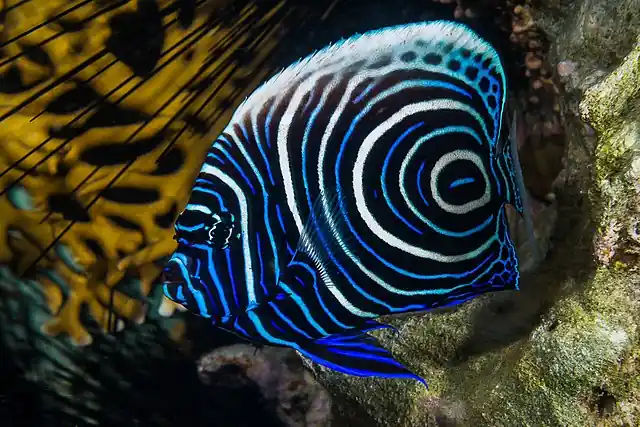
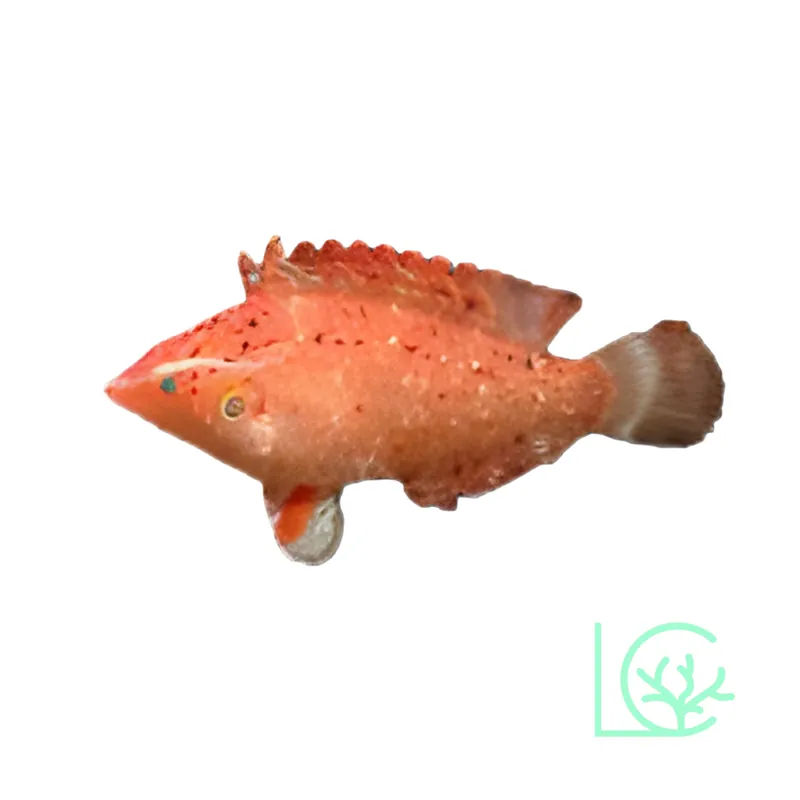
A greatImperator Juvenile Angel!
Origin: Eastern Asia
Size info:
Size M: approx. 2.25 – 3.5″
There once was an Imperator Juvenile Angel,
Whose beauty was truly angelical,
With a blue and gold hue,
And spines on fins too,
It’s a fish that truly seems magical!
Fun Fish Facts:The Imperator Juvenile Angel can grow up to 18 inches in length and can live for up to 15 years. They are known for their striking blue and gold colors and have spines on their fins for protection. They are also herbivores, feeding on algae and seaweed.
Keeping Emperor Juvenile Angel in an Aquarium
The Emperor Juvenile Angel, also known as Pomacanthus imperator, is a beautiful and popular fish among aquarists. They are relatively easy to care for and can adapt well to life in captivity. Here are some things you should know about keeping this fish in your aquarium:
Tank Size
Emperor Juvenile Angels can grow up to 15 inches in length, so they require a large tank of at least 125 gallons. They also need plenty of swimming space, so make sure the tank is wide enough to accommodate their size.
Water Parameters
Emperor Juvenile Angels prefer a temperature range of 72-78°F and a pH range of 8.1-8.4. They also require good water flow and high levels of oxygenation, so it’s important to have a powerful filtration system and aeration equipment in the tank.
Diet
Emperor Juvenile Angels are omnivorous and will eat a variety of foods, including meaty foods like shrimp, squid, and clams, as well as algae and seaweed. It’s important to provide a balanced diet that includes both plant and animal matter.
Behavior
Emperor Juvenile Angels are generally peaceful, but they can become aggressive towards other angelfish or similar-looking species. They can also be territorial and may establish themselves in a particular area of the tank. It’s best to keep them with other peaceful fish that won’t compete for food or territory.
Coolest Stuff About Emperor Juvenile Angels
- They are one of the largest angelfish species, growing up to 15 inches in length.
- They have a beautiful coloration with bold blue and yellow stripes and a bright orange tail.
- They are relatively easy to care for and can adapt well to life in captivity.
- They are omnivorous and will eat a variety of foods, including algae and meaty foods.
- They are generally peaceful but can become aggressive towards other angelfish or similar-looking species.
Reviews
There are no reviews yet.