
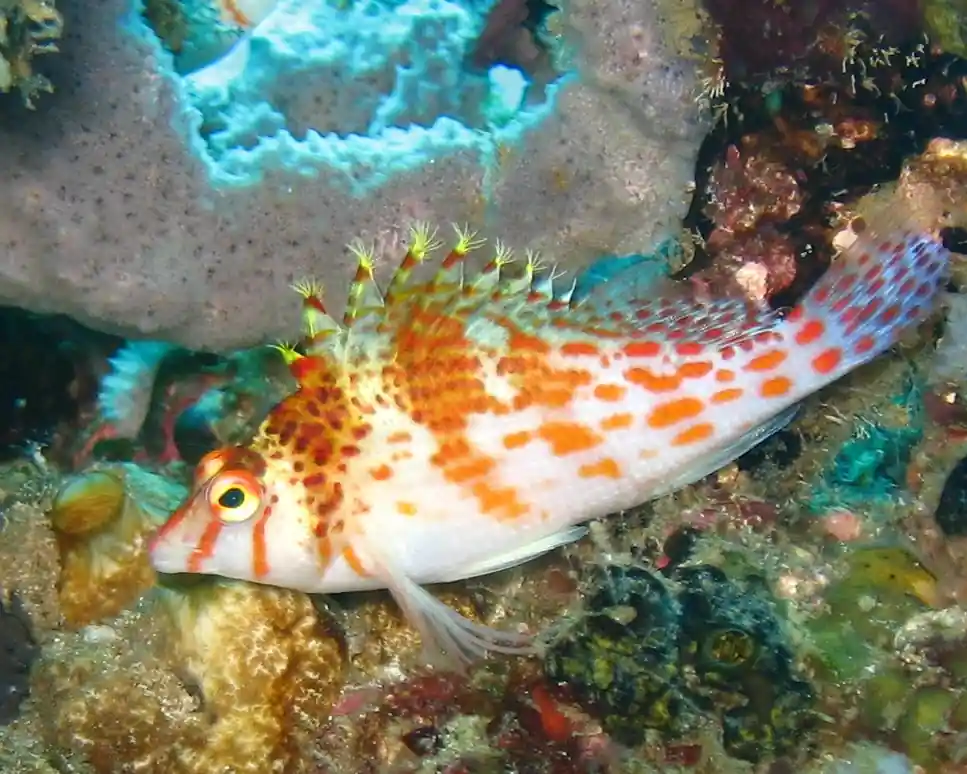
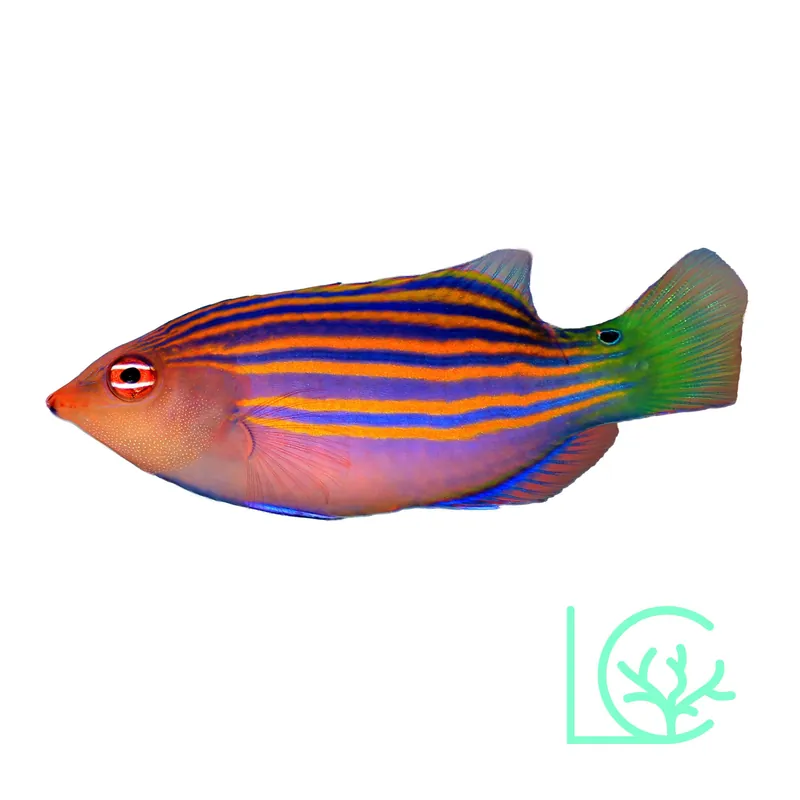
A greatFalco Hawkfish!
Origin: Eastern Asia
Size info:
Size M: approx. 2 – 3″
Falco Hawkfish is quite a sight
With a coloration that’s brilliantly bright
They perch on coral high
Watching for prey with a keen eye
In the ocean they truly reign with might!
Keeping Falco Hawkfish in an Aquarium
The Falco Hawkfish, also known as the Dwarf Hawkfish, is a colorful and fascinating fish that can make a great addition to a saltwater aquarium. Here are some things to keep in mind when caring for this fish:
Appearance
The Falco Hawkfish has a distinctive appearance, with a bright red-orange body and a black spot on its dorsal fin. It has a large head and mouth, which it uses to catch small prey like shrimp and other small fish. It can grow up to 3 inches in length.
Tank Requirements
The Falco Hawkfish is a hardy fish that can adapt well to different tank conditions. It prefers a tank with plenty of hiding places, like rocks and caves, where it can perch and observe its surroundings. A tank size of at least 30 gallons is recommended, with a temperature range of 72-78°F and a pH range of 8.1-8.4.
Diet
The Falco Hawkfish is a carnivorous fish that feeds on small crustaceans, shrimp, and other small fish. In a home aquarium, it can be fed a diet of frozen or live brine shrimp, mysis shrimp, and other meaty foods. It should be fed twice a day, with only as much food as it can eat in a few minutes.
Behavior
The Falco Hawkfish is a territorial fish that can be aggressive towards other fish, especially other hawkfish or fish that resemble its prey. It should be kept with other fish that are similar in size and temperament. It may also nip at corals and invertebrates, so it should be kept in a tank without these types of creatures.
Coolest Stuff
One of the coolest things about the Falco Hawkfish is its ability to change color to match its surroundings. This is known as chromatic adaptation, and it allows the fish to blend in with its environment and avoid predators. The Falco Hawkfish is also known for its hunting skills, using its large mouth to catch small prey and its strong pectoral fins to perch on rocks and other surfaces.
Reviews
There are no reviews yet.