
Approx. Size:
Small: 1.25-2.5 Inches
Medium: 2.5-4 Inches
Large/Changing: 4+ Inches
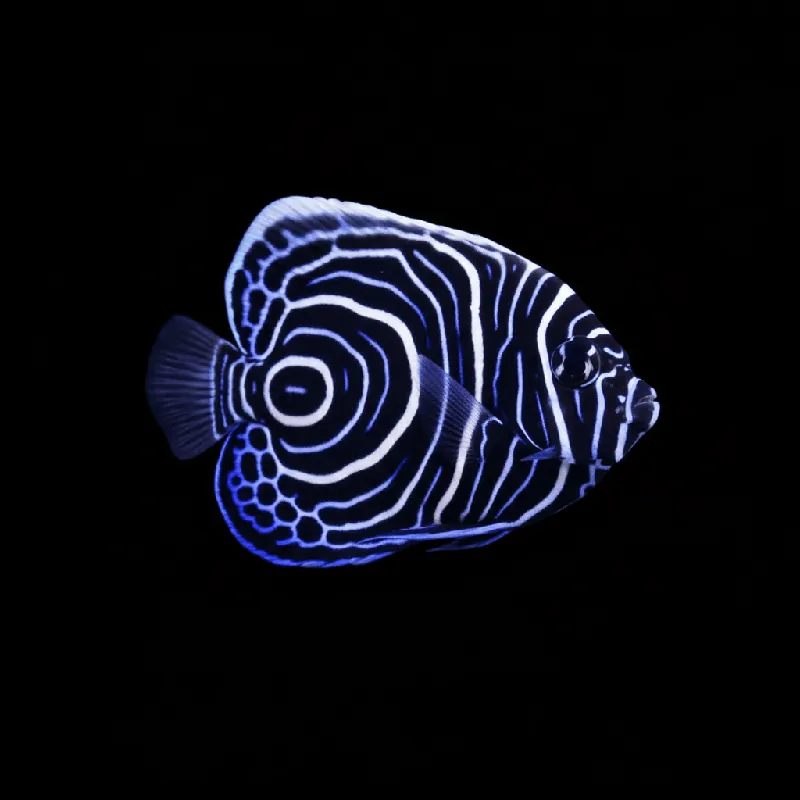
Emperor Angelfish (Pomacanthus imperator)
The Emperor Angelfish is one of the most iconic and visually striking marine angelfish in the hobby. Juveniles feature a mesmerizing pattern of electric blue and white concentric circles, while adults develop bold horizontal stripes of blue and yellow, a dark mask across the eyes, and a pale blue face. Known for their dramatic color transformation and majestic presence, they’re a prized centerpiece fish in large marine aquariums.
Tank Requirements
Emperor Angelfish require a spacious aquarium—a minimum of 125 gallons, though 180+ gallons is ideal as they grow and mature. They need a tank with plenty of live rock for grazing and hiding, along with open swimming areas. These angelfish do best in a well-established, stable marine system with excellent water quality and consistency in salinity, temperature, and pH.
Algae Grazers and Foragers
While not dedicated algae-eaters, Emperor Angelfish are natural grazers. They’ll pick at rockwork for algae, sponges, tunicates, and other small invertebrates. Their foraging helps promote a balanced ecosystem, but they should not be relied on for algae control. They are more sponge- and protein-focused in their natural diet.
Diet and Feeding
A varied, nutrient-rich diet is key to maintaining the Emperor Angelfish’s coloration and health. Feed a combination ofhigh-quality marine angelfish formulas, frozen mysis or brine shrimp, chopped seafood, and sponge-based prepared foods. Supplement their diet withnori, spirulina, and marine algae sheetsseveral times per week. Feed2–3 times daily, especially during their juvenile and growth stages.
Tankmates and Behavior
Generally semi-aggressive, Emperor Angelfish can become territorial—especially as they mature. They may bully smaller or more passive tankmates, so pair with fish of similar size or temperament. They arenot reef-safe, as adults are known to nip atLPS, SPS, and soft corals, as well as sessile invertebrates like sponges and clams. Best suited forFOWLR (Fish-Only With Live Rock)systems or carefully selected reef tanks with caution.

Reviews
There are no reviews yet.