
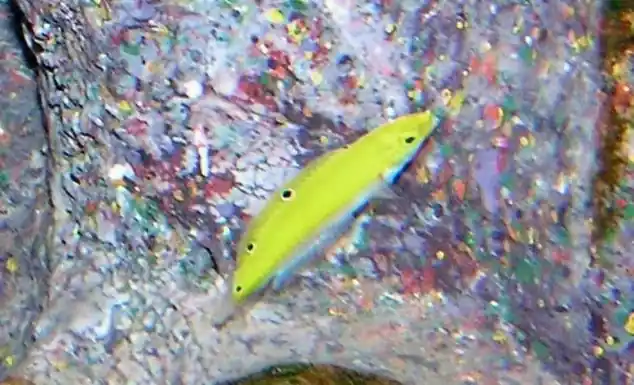
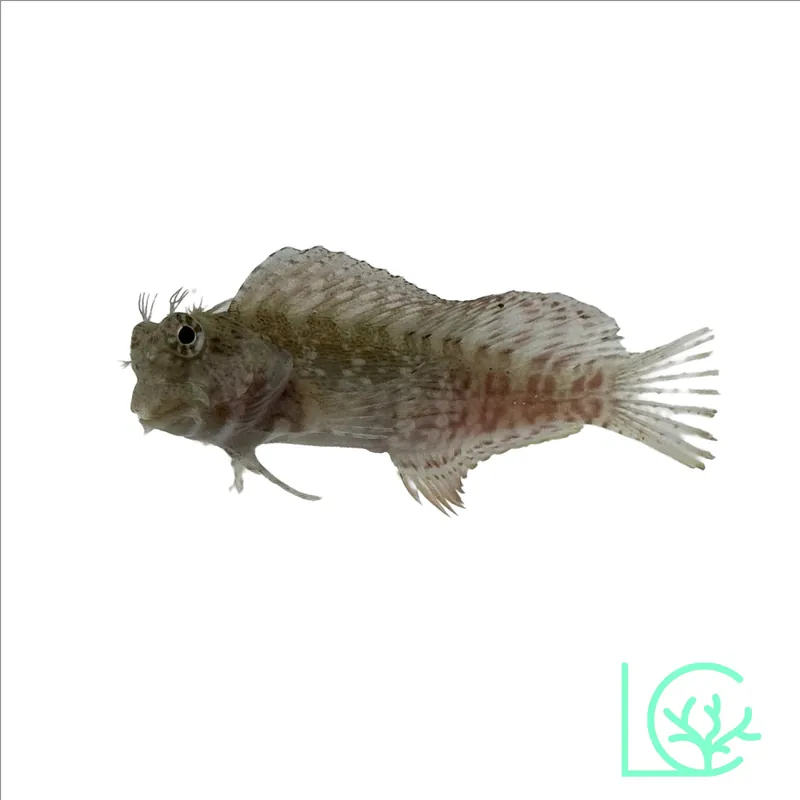
A greatCanarytop Wrasse!
Origin: South Asia
Size info:
Size S: approx.< 2"
Size M: approx. 2 – 3″
There once was a Canarytop Wrasse,
Whose colors were quite a contrast!
Its head was green
And its tail was serene,
A sight that one couldn’t surpass!
This wrasse is a sight to behold,
Its colors are worth more than gold.
They change when it’s awake
Or when it takes a break,
A feat that is truly untold!
It’s a fish that lives in the reef,
Forever making its presence chief.
With its sharp teeth and agility
It’s an expert in its hostility,
A predator that won’t give you brief!
So if you ever come across this fish,
Take a moment and make a wish.
For it’s a sight you’ll never forget,
A vibrant fish that you won’t regret,
A true beauty of the ocean abyss!
Keeping Canarytop Wrasse in an Aquarium
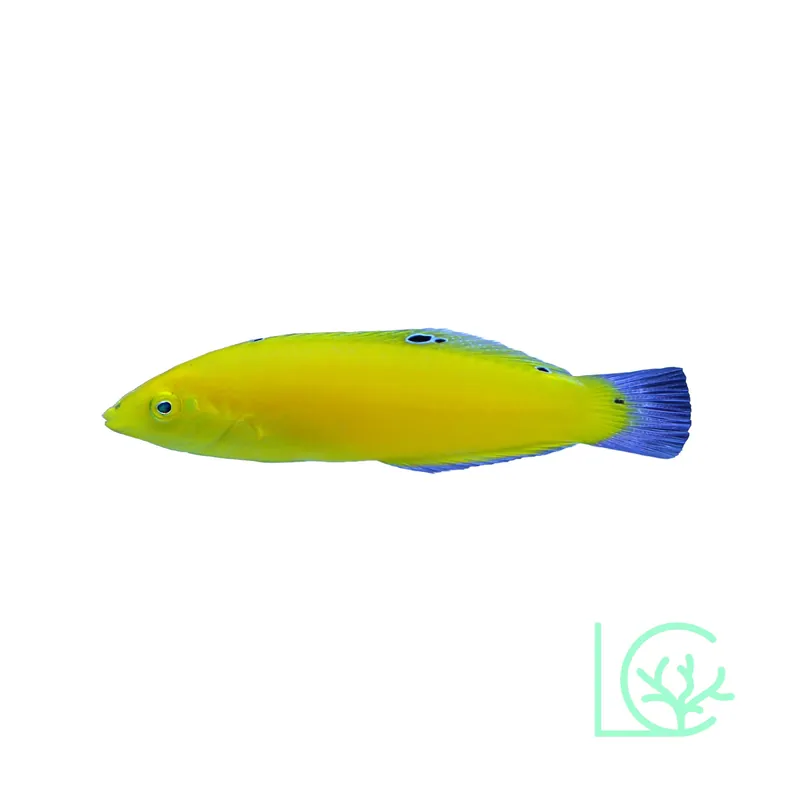
The Canarytop Wrasse (Halichoeres leucoxanthus) is a beautiful and colorful fish that can make a great addition to a saltwater aquarium. Here are some things to keep in mind when caring for this species:
- Canarytop Wrasses are relatively small, reaching a maximum size of around 4.5 inches.
- They are generally peaceful and can be kept with other non-aggressive fish species.
- Provide plenty of hiding places and live rock for the Canarytop Wrasse to explore and hide in.
- They require a well-established aquarium with good water quality and a stable temperature.
- Canarytop Wrasses are carnivorous and should be fed a varied diet of meaty foods such as shrimp, squid, and fish.
Coolest Facts about the Canarytop Wrasse
- The Canarytop Wrasse gets its name from its bright yellow coloration on its head and dorsal fin, resembling a canary bird.
- They are found in the western Atlantic Ocean, ranging from Florida to Brazil.
- Canarytop Wrasses are known to change coloration depending on their mood or surroundings.
- They are active swimmers and can often be seen darting around the aquarium.
- Canarytop Wrasses have been known to jump out of open aquariums, so make sure to provide a secure lid.
Reviews
There are no reviews yet.