
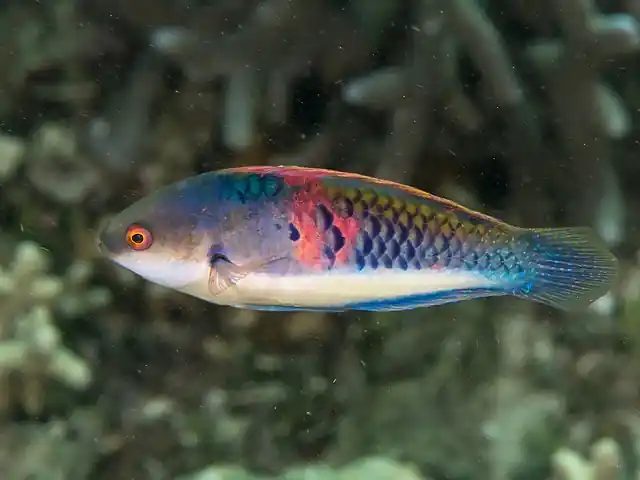
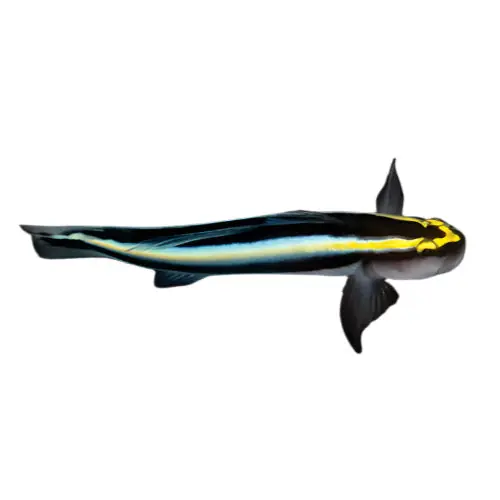
A greatBlueside Fairy Wrasse!
Origin: Eastern Asia
Size info:
Size M: approx. 2 – 3″
There once was a Blueside Fairy Wrasse
Whose colors were sure to impress
With vibrant blues and greens
And a tail just like a dream
This fish is truly the best!
Keeping Blueside Fairy Wrasse (Cirrhilabrus cyanopleura) in an Aquarium
The Blueside Fairy Wrasse, also known as Cirrhilabrus cyanopleura, is a popular and colorful species of wrasse that is found in the Western Pacific Ocean. They are a great addition to a reef aquarium, as they are peaceful and easy to care for.
Appearance
The Blueside Fairy Wrasse has a stunning appearance, with bright blue and purple colors on its body and fins. The males have a more vibrant coloration than females, with a more prominent blue stripe running down their sides. They are also relatively small, growing up to 3 inches in length.
Behavior
Blueside Fairy Wrasse are peaceful fish that can be kept in a community aquarium. They are known to be active and playful swimmers, and will often swim in the open water column. They are also known to be jumpers, so it is important to have a tight-fitting lid on the aquarium.
Diet
Blueside Fairy Wrasse are omnivores and will eat a variety of foods, including frozen and live foods such as brine shrimp, mysis shrimp, and chopped seafood. They will also eat flake and pellet foods, but it is important to supplement their diet with live or frozen foods.
Tank Requirements
Blueside Fairy Wrasse are relatively easy to care for and can be kept in a tank as small as 30 gallons. They prefer a well-lit aquarium with plenty of hiding places, such as caves and crevices. They also require a sandy substrate as they like to burrow and sift through the sand.
Coolest Stuff about Blueside Fairy Wrasse
- Blueside Fairy Wrasse are known to change color depending on their mood and environment.
- They are known to form harems in the wild, with one male and several females.
- Blueside Fairy Wrasse have been known to jump out of open aquariums, so it is important to have a tight-fitting lid.
- They are relatively hardy and can adapt to a range of water conditions.
Reviews
There are no reviews yet.