
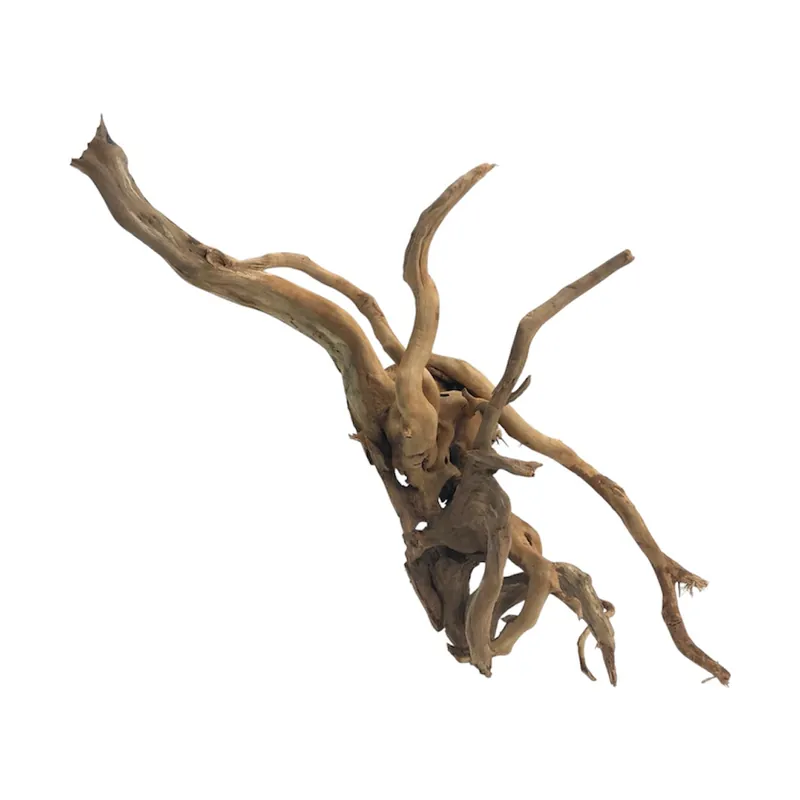
Spiderwood
Spiderwoodisn’t a trunk or a branch — it’s the root system of shrubs in theRhododendrongenus (part of the heath family, Ericaceae, the same group as azaleas). Those roots are harvested, dried, and cured for aquarium use, which is why every piece looks so wild: instead of a straight log you get a dense tangle of leg-like limbs radiating from a central base and tapering to fine, twiggy tips — the branching “spider” shape that gives the wood its name. Dry, it’s a pale tan; once saturated it deepens to a warm reddish-brown. Because each piece is a natural root, no two are ever identical.
Aquascaping Tip:Combine two or three pieces fanning out from a single low point to build one convincing “tree” rather than scattering wood across the tank — it instantly looks more intentional. Angle the finest tips toward the front glass; those delicate ends create a sense of depth and forced perspective that makes even a nano tank feel larger than it is.
In a layout, spiderwood is one of the easiest hardscape materials to build around. The fine branching gives you natural anchor points for epiphytes likeAnubias,Bucephalandra, andJava fern, and the textured surface is ideal for tying or gluing on mosses that gradually soften the wood into a lush, mature scape. Stood upright it reads as a canopy or weathered tree; laid low and fanning outward it becomes a sprawling root system. It’s a staple of nature-style and biotope aquascapes for exactly this reason — it does much of the compositional work for you.
Preparation & What to Expect:Fresh spiderwood floats, so boil or soak it until fully waterlogged and it sinks on its own — boiling is the fast route and also sterilizes the surface. Like all natural driftwood it leaches tannins and will tint the water a light tea color at first; this is harmless and even beneficial for blackwater and soft-water species, but a few water changes or some activated carbon will clear it if you prefer crystal water. Finally, don’t be alarmed by a soft white biofilm in the first couple of weeks — it’s a normal part of new wood curing, harmless to fish and shrimp (shrimp love grazing on it), and it fades on its own as the tank matures.
Reviews
There are no reviews yet.