
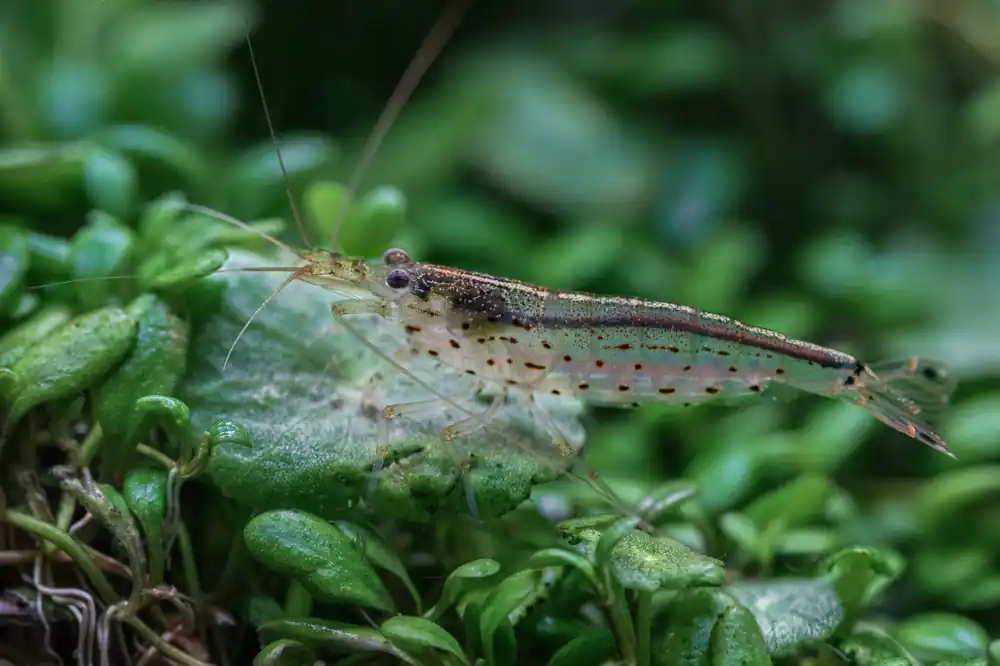
Amano Shrimp
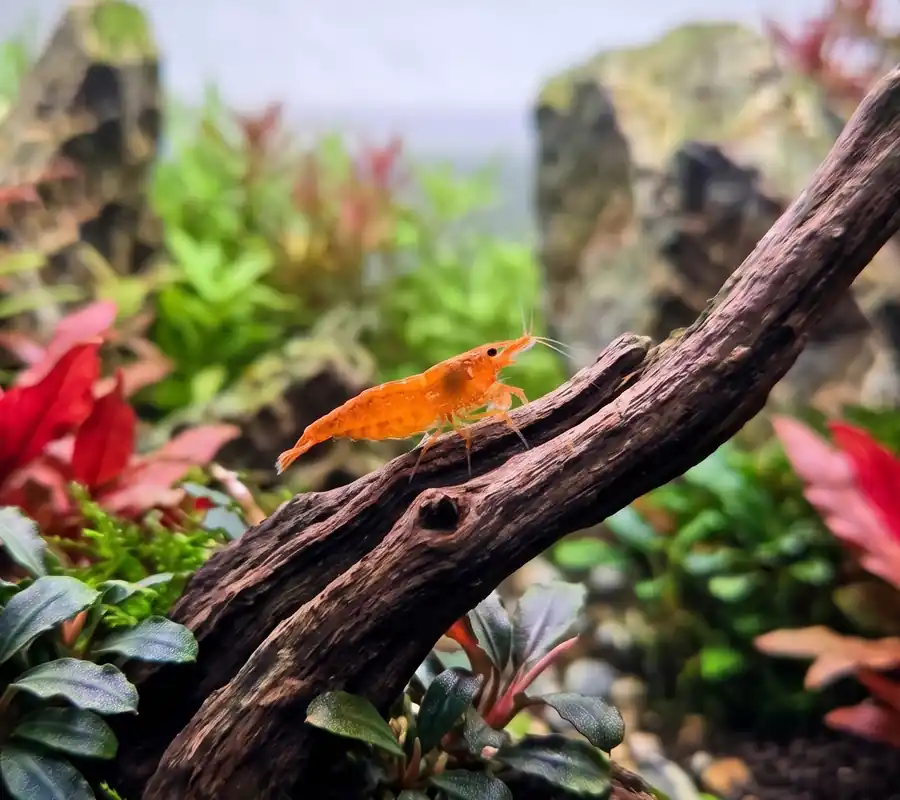
Amano Shrimp(Caridina multidentata) is the single most famous algae-eating shrimp in the aquarium hobby. Made famous by legendary aquascaper Takashi Amano, who used them by the hundreds to keep his planted tanks immaculate, this species has become the go-to algae control tool for planted aquariums worldwide. Translucent grey-blue with a broken line of small reddish-brown dots along the sides, Amano Shrimp grow noticeably larger than Neocaridina or Caridina dwarf shrimp — reaching up to 2 inches, making them one of the largest true shrimp regularly kept in freshwater tanks.
⚠ Copper Warning:Copper isfatalto all shrimp — even trace amounts. Never use copper-based medications or treatments in any aquarium housing shrimp. Check all fish medications carefully before use.
Amano Shrimp are primarilyalgae and biofilm grazersrather than general scavengers — they are famous for eating types of algae that almost nothing else in the hobby will touch, including hair algae, thread algae, and beard algae. A group of Amanos working a planted tank is one of the most effective natural algae control methods available, and this is the primary reason hobbyists keep them. Unlike Neocaridina and Caridina shrimp, Amanos cannot reproduce in freshwater — their larvae require brackish or saltwater to develop, so there is zero risk of an Amano population explosion in a home aquarium. Every Amano Shrimp sold in the hobby is either wild-caught or raised through a brackish-water breeding process.
⚠ Acclimation — Go Slowly:Shrimp must be acclimated very slowly to a new aquarium — sudden parameter changes are a leading cause of losses on arrival. The preferred method isdrip acclimation: attach an airline tube with a knot or valve to create a slow drip from the tank into the bag or container, running for at least 60–90 minutes until the water volume has at least doubled. If drip acclimation equipment is not available, addone tablespoon of tank water to the bag every 5 minutesfor at least 45–60 minutes before releasing the shrimp. Never rush this process.Feeding & Care Tip:Amano Shrimp are algae feeders first — in a tank with healthy algae and biofilm growth, they will spend most of their day grazing and need very little supplemental feeding. Use food as asupplement, not a primary food source. When algae is scarce, or to keep a group well-conditioned, offerGlasGarten Shrimp Dinner 2a few times per week, and a light dusting ofGlasGarten Bacter AEto help build biofilm on surfaces.GlasGarten Mineral Junkie BitesandGlasGarten Mineral Foodsupport healthy molting and should be offered periodically, especially in softer water.
Amano Shrimp are completely peaceful and make excellent additions to community planted tanks, shrimp colonies, and aquascapes of all kinds. They are more tolerant of a range of water parameters than Caridina cf. cantonensis varieties (like Crystal Reds or Taiwan Bees), making them a forgiving, low-maintenance choice for hobbyists who want effective algae control without the sensitivity of fancier shrimp. They will not interbreed with Neocaridina or Caridina dwarf shrimp and will not eat shrimp fry, so they are safe to keep alongside breeding colonies. Avoid housing them with aggressive or large fish that may see them as food, and use caution with bettas, as individual temperament varies.
Molting is the most vulnerable period in a shrimp’s life — for several hours after molting, the new shell is soft and the shrimp is defenseless. Do not remove molted shells from the aquarium; Amanos will consume them to reclaim the minerals they contain. A shrimp that fails to fully exit its old shell — afailed molt— is usually a sign of insufficient minerals or unstable water parameters.
| Amano Shrimp | |
|---|---|
| Difficulty | Beginner — Easy |
| Temperament | Peaceful — safe with small non-predatory fish and other dwarf shrimp |
| Adult Size | Up to 2 inches (5 cm) — among the largest shrimp commonly kept in freshwater |
| Group Size | 6 minimum — Amanos are social and do best in groups |
| Recommended Stocking | 1 per 2–3 gallons for effective algae control |
| Ideal Temperature | 70–78°F (21–26°C) |
| Ideal pH | 6.5–7.5 |
| Ideal GH | 4–14 dGH |
| Ideal KH | 0–10 dKH |
| Ideal TDS | 150–300 |
| Primary Food | Algae and biofilm (natural grazing) — the primary food source |
| Supplemental Food | GlasGarten Shrimp Dinner 2; GlasGarten Bacter AE; GlasGarten Mineral Junkie Bites; GlasGarten Mineral Food |
| Origin | Japan, Taiwan, and the Korean Peninsula |
| Notes | Copper:Fatal — never use copper medications in shrimp tanks Breeding:Cannot reproduce in freshwater — larvae require brackish water, so no population control needed Diet:Best known for eating hair, thread, and beard algae that most other species ignore Molting:Do not remove molted shells — shrimp consume them for minerals Tankmates:Will not eat shrimp fry — safe with breeding Neocaridina/Caridina colonies |
Reviews
There are no reviews yet.